
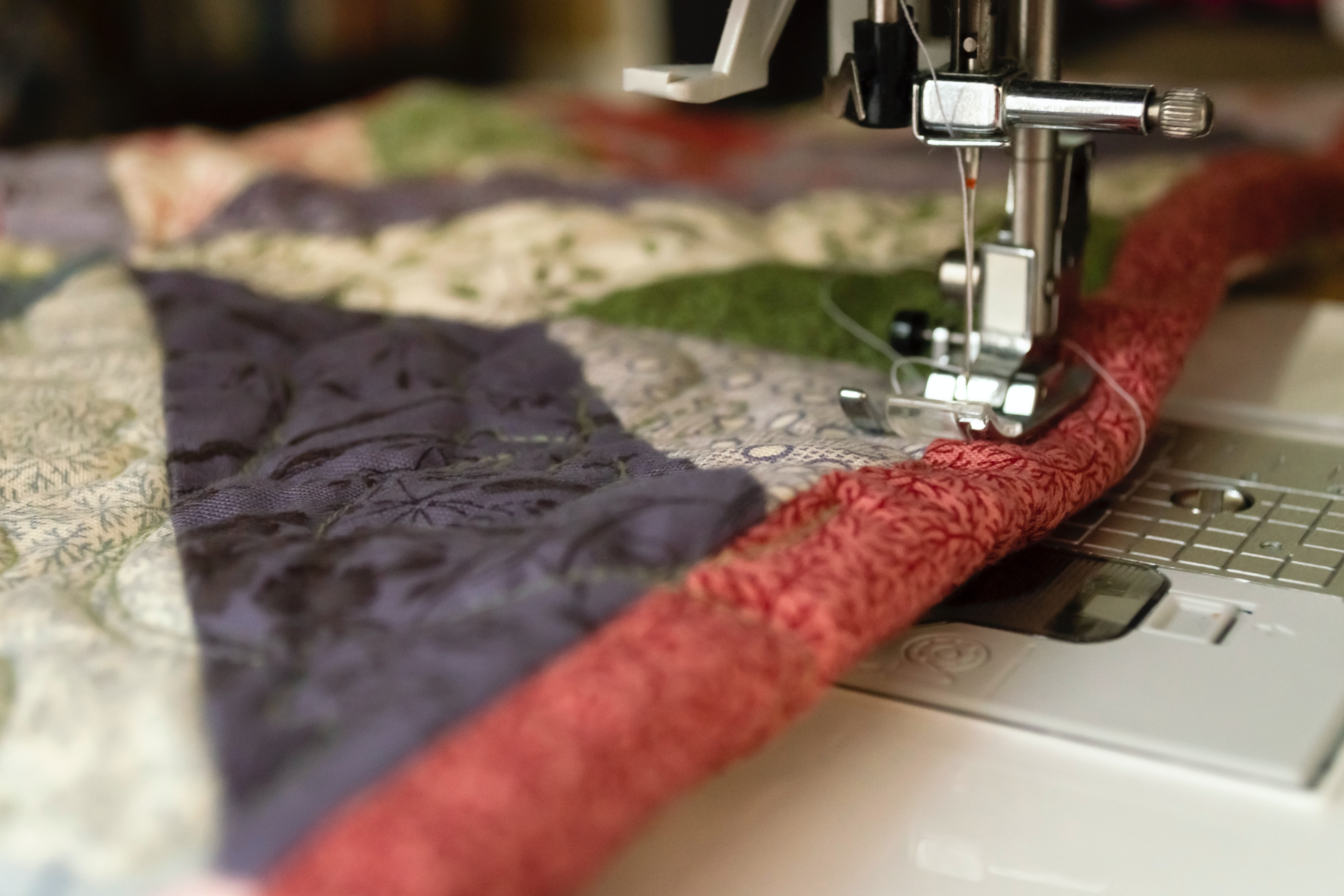
Learn quilting skills, techniques, and tools, as you sew your own quilts, table runners, and wall hangings. Explore how to select appropriate fabrics, create pleasing patterns, and finish quilts using different techniques.
Exploring 4-H Quilting
Spark Activity: Design Your Own Quilt Square
SUPPLIES:
- 1 copy of the Design Your Own Quilt Square worksheet or a blank piece of paper where you can draw your own grid.
- Colored pencils, markers, or squares
- Ruler (optional)
DIRECTIONS:
- Print a copy of the Design Your Own Quilt Square worksheet, or if you don't have a printer available, draw a grid of 1" by 1" squares, 6 squares across and 6 squares tall on a blank sheet of paper.
- Look at your coloring supplies and decide on at least 3 colors that would look good together.
- Take a look at some example quilt square designs on the worksheet or on the internet to get ideas.
- On the grid on your worksheet, design your own quilt square. In each box, you can color the whole square one color, or divide the square into smaller shapes like squares, rectangles, or triangles (a ruler can help with this step). Try to plan your design fully before you begin to color. Try for pleasing patterns, repetition, and movement!
- Show off your finished quilt square to your family or fellow club members.
4-H Project Levels and Goals
Beginner
- Learn basic quilting and piecing techniques
- Discover how to select appropriate fabrics
- Learn about quilting supplies and equipment
- Improve your basic sewing skills
Intermediate
- Improve your measuring and ability to use a rotary cutter
- Explore different quilt finishing options
- Learn binding techniques to finish quilt edges
- Learn to use color effectively in your designs
Advanced
- Learn about free-motion quilting
- Adjust machine tension
- Learn how to handle bulk in the machine while quilting.
- Learn to how transfer and follow a design for quilting.
- Exploring advanced piecing techniques like foundation piecing, English paper piecing, and miniature scale.
- Improve your finishing techniques.
Put Your Project Into Action
Find a Resource
Illinois 4-H’s recommended resources for quilting are below, but you can use other resources you find, too! Your local library can be a great place to look for books to help you learn to quilt and find quilting project ideas.
Beginner quilting resources
- You Can Quilt! (book by the Ohio State University) – Learn the basics of quilting! Gather quilting tools, select and cut fabrics, stitch pieces together, and finish off your quilt! For youth in grades 3-12.
- Beginning Quilting Series – YouTube playlist from Missouri Star explaining quilt fabric, quilting supplies, getting started sewing quilts, and picking quilt patterns.
- Beginner Quilting Online Course – Online beginner quilting course from Quilt Addicts Anonymous featuring 12 videos to help folks create their first quilt.
Intermediate quilting resources
- Quilting the Best Better (book by the Ohio State University) – Build off the skills you learned in the You Can Quilt book. Practice and refine your quilting skills using the half-square triangle method. Learn about some advanced tools and gadgets to use while quilting and make a lap quilt. For youth in grades 6-12.
All levels of quilting resources
- Quilt Quest (Downloadable resource by Nebraska Extension) – Learn to design and make a quilt; the history of quilts; preservation of both old and new quilts; documentation of quilts; using quilt designs in other media such as glass, wood, or paper; photographing quilts; and using technology in your quilting journey.
- Missouri Star – YouTube playlist of quilting video tutorials with beginner, intermediate, and advanced techniques related to quilting.
- Just Get it Done Quilts – Set of YouTube playlists of various quilt tutorials and tips.
- Tiny Orchard Quilts – YouTube playlist called “Block Study” focused on building skills by working with different block designs.
Show Your Skills
In this project you can make a variety of quilted items. Some ideas are below based on experience level.
Beginner projects
- Make a doll quilt (up to 24” by 30”).
- Make a baby quilt (up to 48” by 48”)
- Make a quilted table runner (maximum width of 18”, length determined by table)
- Make a small, quilted wall hanging (up to 36” by 36”)
Advanced projects
- Make a lap quilt (width ranging from 42” – 58” length ranging from 56” – 70”)
- Make a large, quilted wall hanging (larger than 36” by 36”)
- Make a quilt that fits any size bed (twin, double, queen or king)
If you plan on exhibiting your quilted item at the county fair, make sure you view the exhibit requirements in your local show book or on the Illinois State Fair page to make sure your project will be eligible to compete.
Once you’ve decided what you want to make, it’s time to do it! Learn by doing, as you work on bringing your creation to life. Sometimes everything won’t go according to plan, but learn from mistakes and challenges and keep going! Ask people in your life for help when you need it! We encourage you to take photos as you create your project. This helps you remember what you did and show off your process, step-by-step.
Finding Help
Most people learn better when they have someone to help them on their project journey! Maybe you’re lucky enough that a family member or family friend already knows how to quilt and can help teach you! If not, here are some tips for how to get some support:
- See if there is a 4-H special interest club you can join! Some counties offer clubs focused on sewing or quilting.
- Look for a local class. These can be run by a local quilt shop, park district, library, art guild, or other organization. Online courses might be available if you can’t find something to attend in-person.
- See if there is a local quilting guild or group near you. These groups may have adults who would be willing to serve as a helper or mentor.
Share Your Work
After you finish your project, it’s time to share what you learned! Sharing your new skills and getting others excited about your project is a great way to continue learning and can be a valuable way to serve your community! Here are some ideas:
- Share your project at school, with your 4-H club, or other out-of-school time program. Explain what you did to make your quilt and what you learned.
- Develop an exhibit to take to your local county 4-H show. Check your local 4-H show book or visit the Illinois State Fair page on the Illinois 4-H website to learn about the exhibit requirements.
Take Your Learning Further
After you’ve finished your project it’s time to ask “What’s next?”. Maybe you want to continue to grow your skills by making a more challenging quilting project, or maybe you want to try out another related project area, such as:
You can also explore more about the world of quilting by attending local quilt shows or festivals, joining a local quilt guild or group, and visiting museums that feature quilts. The Midwest has tons of great museums that the art of quilting! The National Quilt Museum is just across the Ohio River from Illinois in Paducah, Kentucky! The International Quilt Museum is in Lincoln, Nebraska. Neighboring states like Iowa, Missouri and Wisconsin also have quilt museums. Many historical and art museums also have quilts in their collections.
Give back! You can use your learning to contribute to a community service project. Many organizations collect quilts to donate to groups like children in crisis, veterans, and disaster victims. Find a group and make something to donate!
Have you learned enough that you’re ready to help teach others? Do a demonstration about something you learned at a local club meeting, or volunteer to help as a junior leader at a quilting workshop or with a 4-H quilting club.
Explore these future study and career opportunities related to quilting!
- You can study fiber and textile arts at places like Northern Illinois University and the School of the Art Institute of Chicago.
- Investigate being a fashion or textile designer, a craft and fine artist, an art teacher, or a museum curator or conservator.
- Explore opportunities to be an entrepreneur that use the skills you learned quilting.
Careers
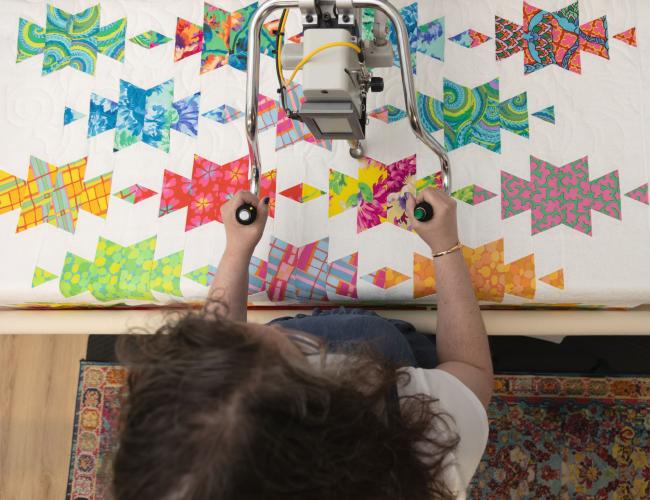
- Craft or fine artist
- Fashion or textile designer
- Content creator
- Art teacher
- Museum conservator or curator
Start a Conversation
- What basic skills do you need to make a quilt?
- How do you pick fabric for your quilt?
- What is a quilt pattern and how do you find one to fit your skills?
- How do you piece a quilt together?
- What are the different types of quilt bindings?
Credits
Authored by Amy Henschen, Senior Program Lead, Evaluation & Staff Development
